Which termites damage Phoenix-area homes?
Phoenix-area termite problems are mostly subterranean termites, which live in the soil and come up into wood for food. University of Arizona Extension describes three desert species worth knowing:
- Desert subterranean termite (Heterotermes aureus). The most common and by far the most destructive desert species. It attacks cactus, desert trees, utility poles and structural timber.
- Arid-land subterranean termite (Reticulitermes tibialis). Also destructive. It feeds on creosote and similar shrubs, so it can move into houses built where that native vegetation was cleared.
- Gnathamitermes perplexus. A tube-building desert termite that Extension says isn't a structural pest and shouldn't be treated unless it's found inside a building.
Since these look similar to an untrained eye, ask any inspector which species they found and why that changes the treatment.

Signs of subterranean termites
Mud tubes
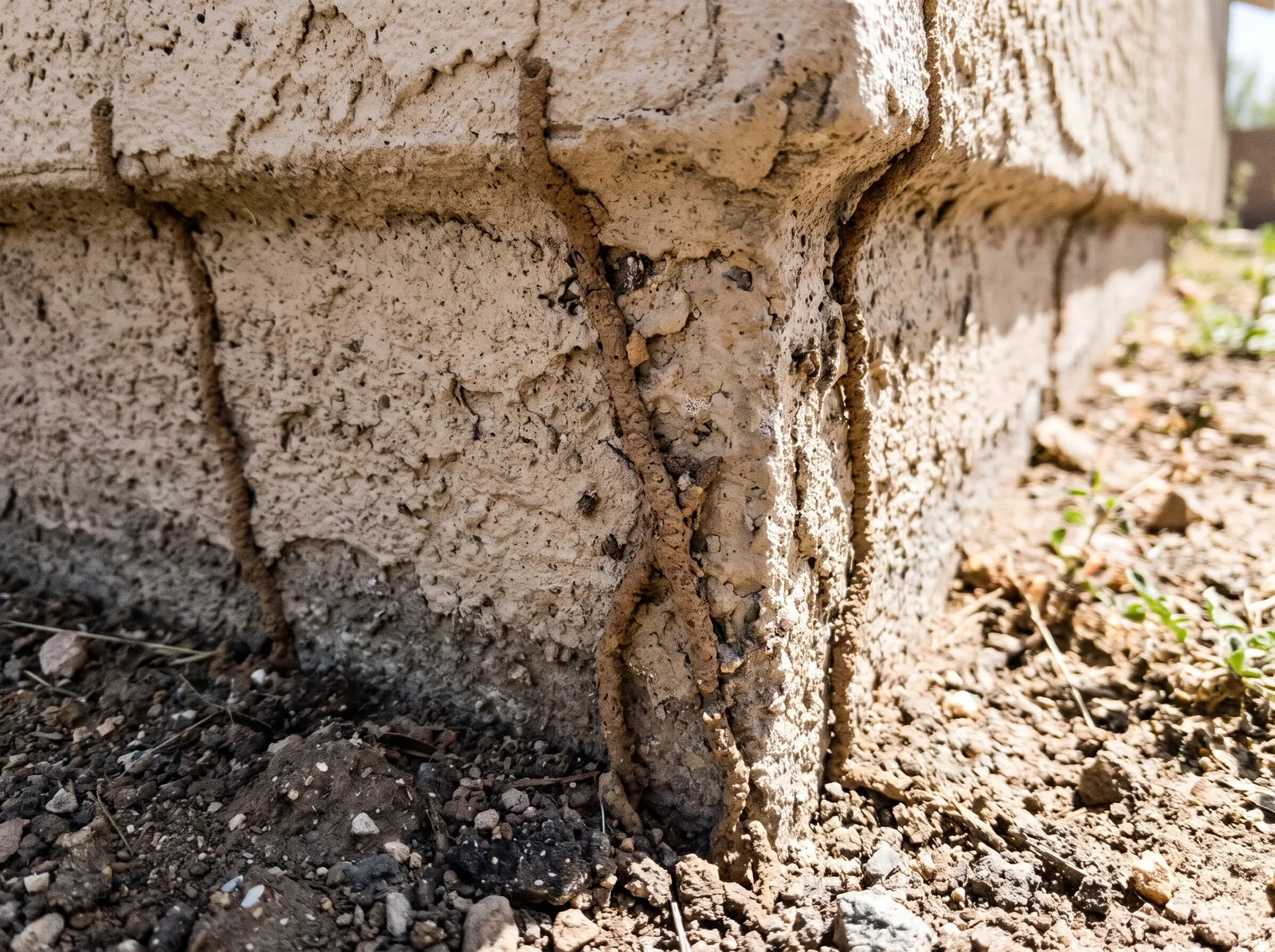
Extension calls a mud tube on the outside stem wall "a good indicator." These pencil-width tunnels of soil let termites move from the ground to wood without drying out. Also check foundation cracks and spots where pipes and ducts come through the slab.
Swarmers after monsoon rain
Desert subterranean termites make their dispersal flights after rain during the monsoon, July through September. The arid-land termite swarms January through March at lower elevations. Swarmers shed their wings after landing, so piles of small wings on windowsills are worth noting.
Hollow-sounding wood
Damaged wood sounds hollow when tapped. Extension suggests tapping exposed wood every few inches with a screwdriver handle.
Conditions that invite termites
Extension lists moisture near the foundation (it suggests keeping irrigation lines more than 18 inches from the stem wall), wood touching soil, stumps and wood scraps near the house, and grading that lets water pool against the home.
How subterranean termites are treated
A licensed company should explain its method in writing. Arizona rules set minimum contents for a termite treatment proposal (see below). The two main approaches are:
Liquid soil treatment
Extension calls conventional liquid termiticides the industry standard. Applicators trench along the foundation, drill through concrete at slab edges and other points, and apply product at labeled rates to make a treated zone in the soil. Control usually comes within about three months. Extension notes that treatments can break down over time in Arizona's hot, dry conditions.
Bait systems
Monitoring stations go into the soil around the house. Once termites feed on the monitor wood, it's swapped for bait with a slow-acting insecticide that spreads through the colony as workers share food. Extension says baiting can take six months to a year or more.
Combination treatment
Some homes get both baits and spot liquid treatment of active tunnels or infested areas.
Most Arizona homes get a termite pretreatment before the slab is poured. State law doesn't require it, but lenders often do. The Pest Management Division's recurrence guide notes that barriers can still fail from soil disturbance, erosion or foundation cracks, so a pretreated house isn't permanently protected.

What a termite proposal and warranty should spell out
The Pest Management Division's guidance lists what a termite treatment proposal must include at minimum: the property address; whether the work is preventive or corrective; the signs of infestation found, with a diagram if applicable; the treatment method and product or device, with a diagram of where work will be done; the cost; the terms of the service agreement; and the inspector's signature and license number. The business name and license number must be prominent.
Warranties and renewals are set by the contract, not by the state. The division's recurrence guide says plainly that it "does not have jurisdiction over contractual matters," and that your contract determines whether the company pays for termite damage.
The WDIIR for home sales
A Wood-Destroying Insect Inspection Report (WDIIR) is the standard Arizona termite inspection report used in real estate deals. What to know:
- It's usually a lender requirement, not a state one. The Department of Agriculture says no state law requires a WDIIR to sell a home.
- Only licensed companies can prepare it. The inspection must be done by a certified applicator in the wood-destroying organism category working for a licensed business. No one who owns or occupies the property can complete it.
- It's a visual inspection of accessible areas. The inspector notes areas that couldn't be inspected and why, along with conducive conditions like earth-to-wood contact and excessive moisture.
- It isn't a guarantee. The form states it is not a structural damage report, not a fungi or mold report, and not a warranty that wood-destroying insects are absent.
- Supplemental reports. A re-inspection by the same company within 30 days to confirm corrective work is a supplemental WDIIR.
Checking a property's termite history
When a licensed company treats a property, it files a Termite Action Report Form (TARF) with the Pest Management Division. The division's termite history search lets you look up treatment records by address for the past three years. This is useful if you're buying, or if a seller says the house "has a warranty." The license check guide covers where to find it.
For national price ranges on inspections and treatments, see pest control cost. For everyday pests that recurring plans cover, see general pest control.
Common questions
What kind of termites are in Phoenix?
University of Arizona Extension calls the desert subterranean termite (Heterotermes aureus) the most common and most destructive desert species. The arid-land subterranean termite also damages structures. A third tube-building desert termite, Gnathamitermes perplexus, isn't considered a structural pest and generally shouldn't be treated unless it's inside the house. A licensed inspector can tell them apart.
Is a termite inspection required to sell a house in Arizona?
No state law requires one. The Arizona Department of Agriculture says the Wood-Destroying Insect Inspection Report (WDIIR) is usually a lender requirement. Only a licensed pest-control business can prepare it, and the inspection must be done by a certified applicator in the wood-destroying insect category. Anyone who owns or occupies the property can't complete the report.
How long does termite treatment take to work?
It depends on the method. University of Arizona Extension says liquid soil treatments usually give control within about three months. Bait systems work through the colony's food sharing and can take six months to a year or more. Some homes need both: baits plus spot liquid treatment of active tunnels.
Can I look up a home's termite treatment history?
Yes. When a licensed company treats a property for termites, it files a Termite Action Report Form (TARF) with the Pest Management Division. The division's termite history search lets anyone look up records by address. Records stay searchable for three years.
Sources
- University of Arizona Cooperative Extension, Termites of the Desert Southwest (AZ1356)
- University of Arizona Cooperative Extension, Liquid termiticide treatment costs (AZ1357)
- Arizona Department of Agriculture PMD, Wood-Destroying Insect Inspection Reports
- Arizona Department of Agriculture PMD, WDIIR Guidance Document
- Ariz. Admin. Code R3-8-307, Wood-destroying insect inspections and WDIIRs
- Arizona Department of Agriculture PMD, Termite Action Report Forms (TARFs)
- Arizona Department of Agriculture PMD, Termite Recurrence Guide
- Arizona Department of Agriculture PMD, Treatment proposal helpful hints