
How roof rats arrived in the Phoenix area
The roof rat (Rattus rattus), also called the black or ship rat, is not native to North America. University of Arizona Extension says it was documented in Phoenix in 2001, probably arriving with shipped food, feed or equipment. Maricopa County's vector control manager has said the first finds were in Arcadia, and an Arizona State University case study describes a large county bait-station program there in 2002.
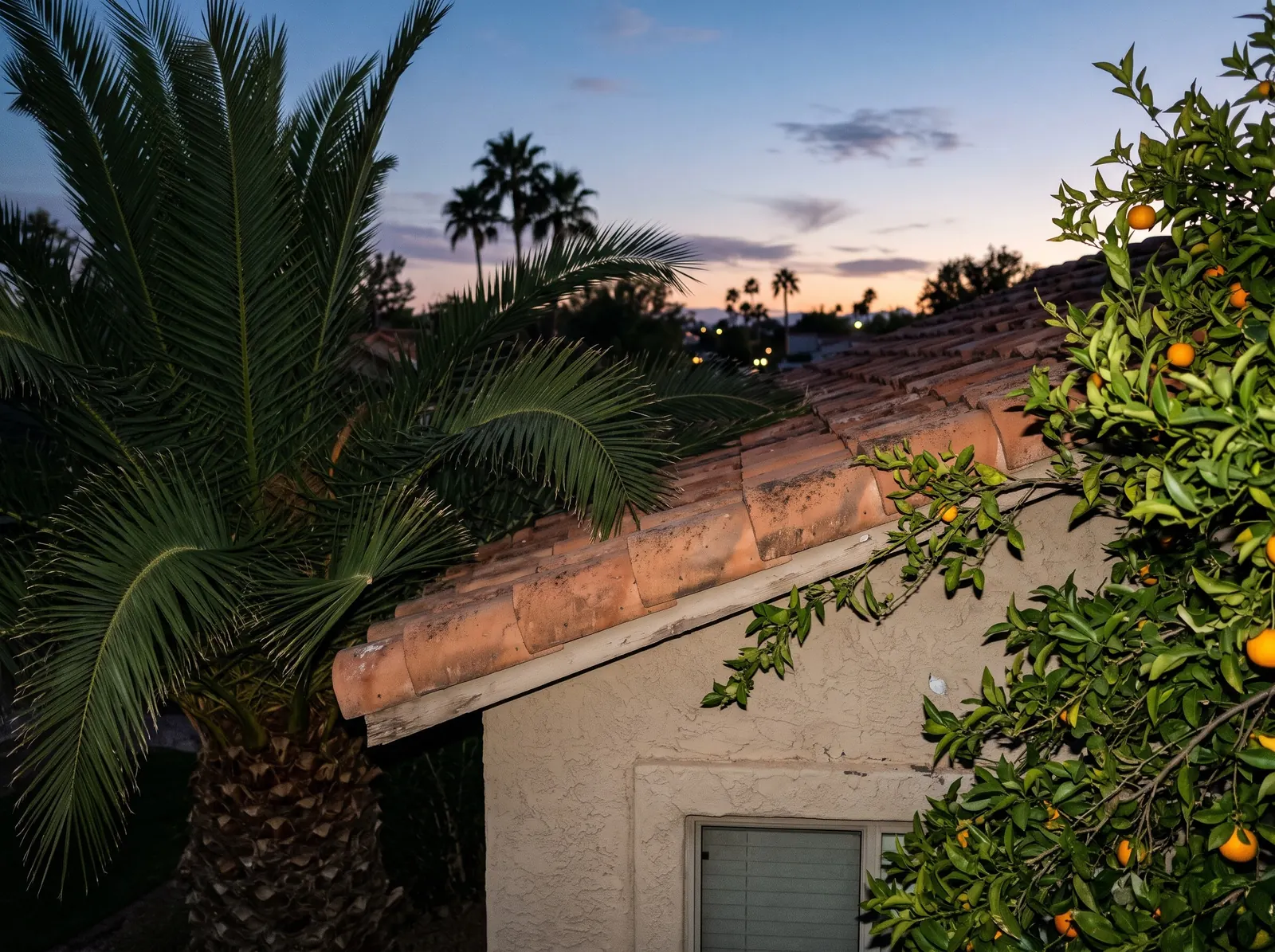
Roof rats are now established across the Valley. Extension notes they've settled into "old growth citrus trees, palm trees, and other mature landscaping," along with the canals and food around homes. That's why older, heavily landscaped neighborhoods tend to report more of them than bare new subdivisions, though they turn up anywhere. Mesa's city page notes they can arrive in moving boxes and settle wherever conditions suit them.
Signs of roof rats
Roof rats are nocturnal climbers. Maricopa County says they spend 90% of their lives four feet or more off the ground, moving along trees, vines, power lines, fences and rooflines. Common signs:
- Hollowed citrus. Extension describes oranges hollowed out on the tree or ground with only the rind left. Sour citrus is often stripped of its rind and left hanging.
- Noises overhead at night. Extension says attic sounds are often the first sign in a home.
- Droppings. Black, banana-shaped, about ¼ to ½ inch long. Droppings alone don't reliably identify the species.
- Smudge marks. Oily rub marks high up, for example between rafters, point to roof rats. Marks near the floor usually mean other rodents.
- Chewing damage. Gnawed wiring (a fire risk), torn insulation, and chewed fruit, nuts, paper or wood.
Extension says roof rats are most active from November through May, which overlaps with winter citrus season.
Exclusion vs. trapping vs. baiting
A good rodent plan usually combines several steps. Ask any provider to explain which ones they're proposing and why.
Exclusion (rat-proofing)
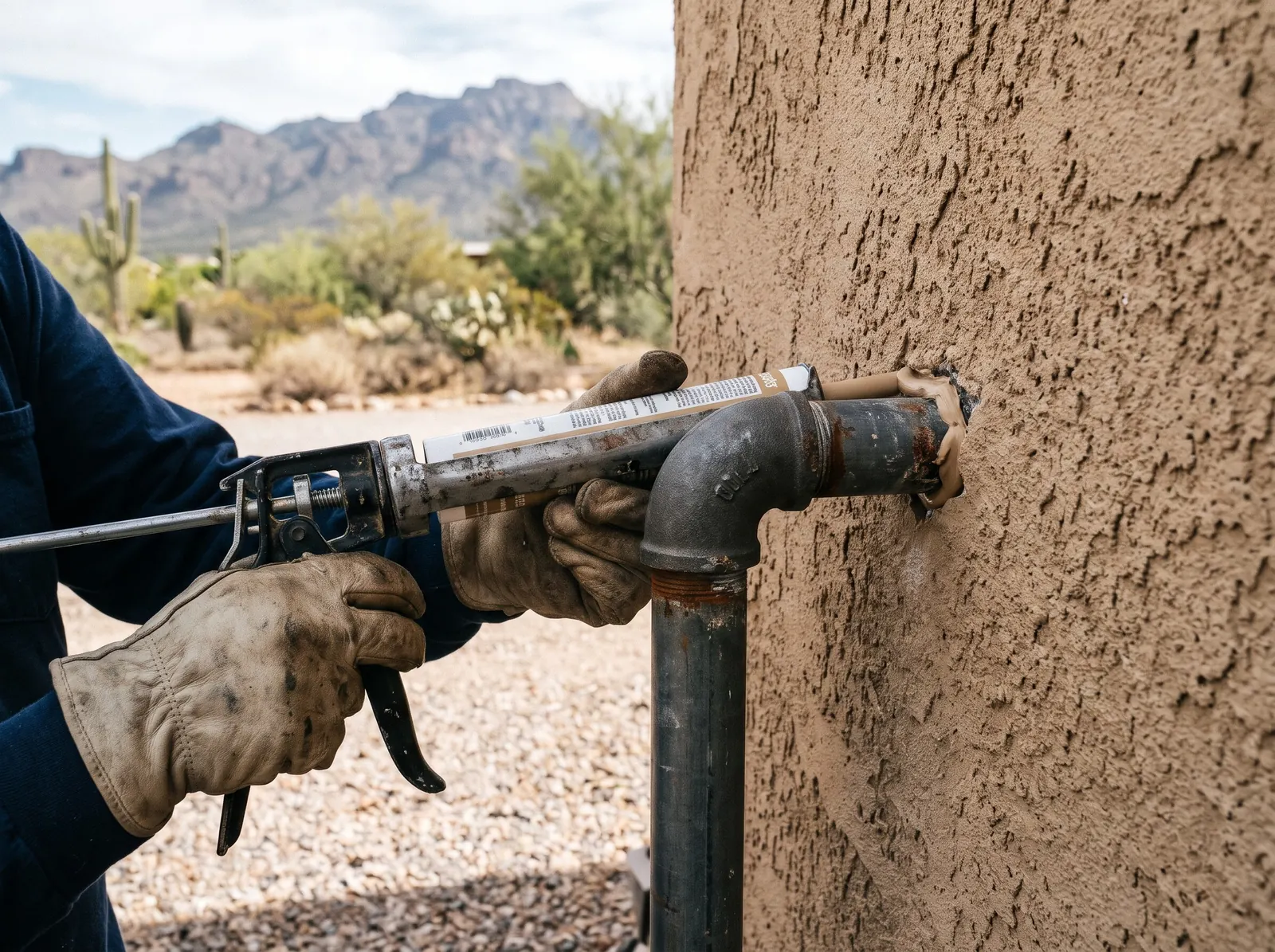
Exclusion means sealing the ways rats get in. University of Arizona IPM guidance says roof rats can fit through openings as small as half an inch, and Maricopa County puts it as "any opening larger than a nickel." The county's guidance mentions:
- Sealing holes and vents, and checking near water heaters, washers and dryers, dishwashers and under sinks.
- Screening sewer vent stacks on the roof.
- Using stucco diamond mesh to screen openings, and stuffing the air conditioning line cover where it enters the attic with steel wool or copper mesh.
- Caulking cracks.
Extension also stresses keeping branches from touching walls and rooflines. University of Arizona IPM guidance says exclusion "MUST be undertaken concurrently" with other control steps. Trapping without sealing tends to become a repeat job.
Trapping
Snap traps placed along travel routes are a standard non-chemical method. Maricopa County suggests looking for scratch marks on the insulation around the air conditioning line entrance and setting a trap there. Ask how often the provider will check and remove traps, since a missed carcass in an attic becomes its own problem.
Rodenticide bait stations
Extension cautions against indiscriminate rodenticide use because of risks to non-target animals. The ASU case study notes that Maricopa County's current approach prefers source reduction over rodenticides. If bait is part of a plan, it should be in tamper-resistant stations, and the provider should say what product it is and where each station goes.
Reducing what attracts roof rats
Some of the most useful steps are things a homeowner does. The City of Tempe and Maricopa County list:
- Harvesting citrus promptly and completely, and picking up fallen fruit and nuts.
- Bringing pet food in at night and storing food in sealed containers.
- Keeping garbage containers covered and cleaning up pet waste.
- Reducing standing water and trimming palm crowns, since Extension notes old fronds give rats shelter.
Extension research also says removing citrus or other food plants won't by itself reduce rat numbers. Sealing the house is what keeps them out of it.
Reporting roof rats
Maricopa County Environmental Services takes roof rat reports through its vector control complaint form. Several Valley cities, including Mesa and Tempe, point residents there.

Hiring for roof rat work
Rodent work is sometimes priced separately from general pest control plans, and exclusion is often quoted as its own job. Ask for the inspection findings, the sealing scope and any follow-up visits in writing. Check the company's Arizona license using the license check guide, and see pest control cost for national price ranges.
Common questions
When did roof rats show up in Phoenix?
University of Arizona Extension says roof rats were documented in Phoenix in 2001, probably arriving with freight. Maricopa County's vector control manager has described the first local finds as in the Arcadia area, and a large county bait program followed there in 2002. They're now established across the Phoenix metro, as well as in Tucson and Yuma.
How do I know if I have roof rats or another rodent?
Roof rats spend most of their time off the ground. Signs include citrus hollowed out on the tree with the rind left behind, scratching in the attic at night, dark smudge marks high on rafters, chewed wiring, and black, banana-shaped droppings about a quarter to half an inch long. Droppings alone don't confirm the species.
Should I use rat poison for roof rats?
University of Arizona Extension cautions against indiscriminate rodenticide use because of risks to pets and wildlife, and Maricopa County's current approach favors source reduction, exclusion and snap traps. If a provider proposes bait stations, ask what's in them, where they'll go, and how they'll keep pets and non-target animals away.
How small a gap can a roof rat use?
University of Arizona IPM guidance says roof rats can squeeze through openings as small as half an inch, and Maricopa County describes it as any opening larger than a nickel. Common entry points include gaps where air conditioning lines enter the attic, roof vents, plumbing penetrations and gaps under garage doors.
Sources
- University of Arizona Cooperative Extension, Roof Rats (AZ1775)
- University of Arizona Cooperative Extension, Roof rats: identification, ecology, and signs
- University of Arizona Cooperative Extension, How to identify and discourage roof rats
- University of Arizona Community IPM, Roof rats in sensitive community environments (2024)
- Maricopa County Environmental Services, Roof rat FAQ
- Arizona State University (Al Brown), Roof Rats Invade Phoenix! case study
- 12News, Winter citrus and roof rats (Maricopa County vector control)
- City of Tempe, Roof rats
- City of Mesa, Roof rats