
Phoenix Pest ReferralValley homeowner guide Before you call

Pest control in Phoenix, AZ

Phoenix-area homes deal with a short list of pests that behave differently in the desert. This guide explains them, when they show up, and how to check a pest-control company before you sign anything.

Phoenix Pest Referral is an independent homeowner guide. It is not a pest-control company and does not inspect, treat, quote, or recommend specific products.

Before you hire, in four steps

  1. Write down what you saw

    Note the pest, where, when, and how many. A photo helps. Scorpions show up best at night under a UV flashlight.

  2. Check the license

    Look the company up with the Arizona Department of Agriculture before anyone treats your home.

  3. Get the scope in writing

    Ask what is inspected, what is applied and where, how often they return, and what a re-service covers.

  4. Read the agreement

    Check the term, renewal, cancellation, and warranty before you sign. Termite warranties vary the most.

The main pests in Phoenix-area homes

The Phoenix metro has a fairly predictable set of household pests. What changes from house to house is which of them you see most, and that usually comes down to what surrounds the home: open desert, mature irrigated landscaping, or newly graded subdivision land.

  • Arizona bark scorpions. The one Arizona scorpion with real medical significance. It climbs, hides in aboveground spots like woodpiles and sheds, and is hard to manage with pesticides alone. See scorpion control.
  • Subterranean termites. The desert subterranean termite is the most common and most destructive species in the low desert. It reaches houses through soil and builds mud tubes up stem walls. See termite treatment.
  • Roof rats. First documented in Phoenix in 2001, now established across the Valley. They live off the ground in citrus, palms and attics. See roof rat control.
  • Ants, cockroaches, crickets and spiders. The everyday pests most recurring service plans are built around. American cockroaches come up from sewers, German cockroaches live in kitchens, and crickets draw scorpions. See general pest control.

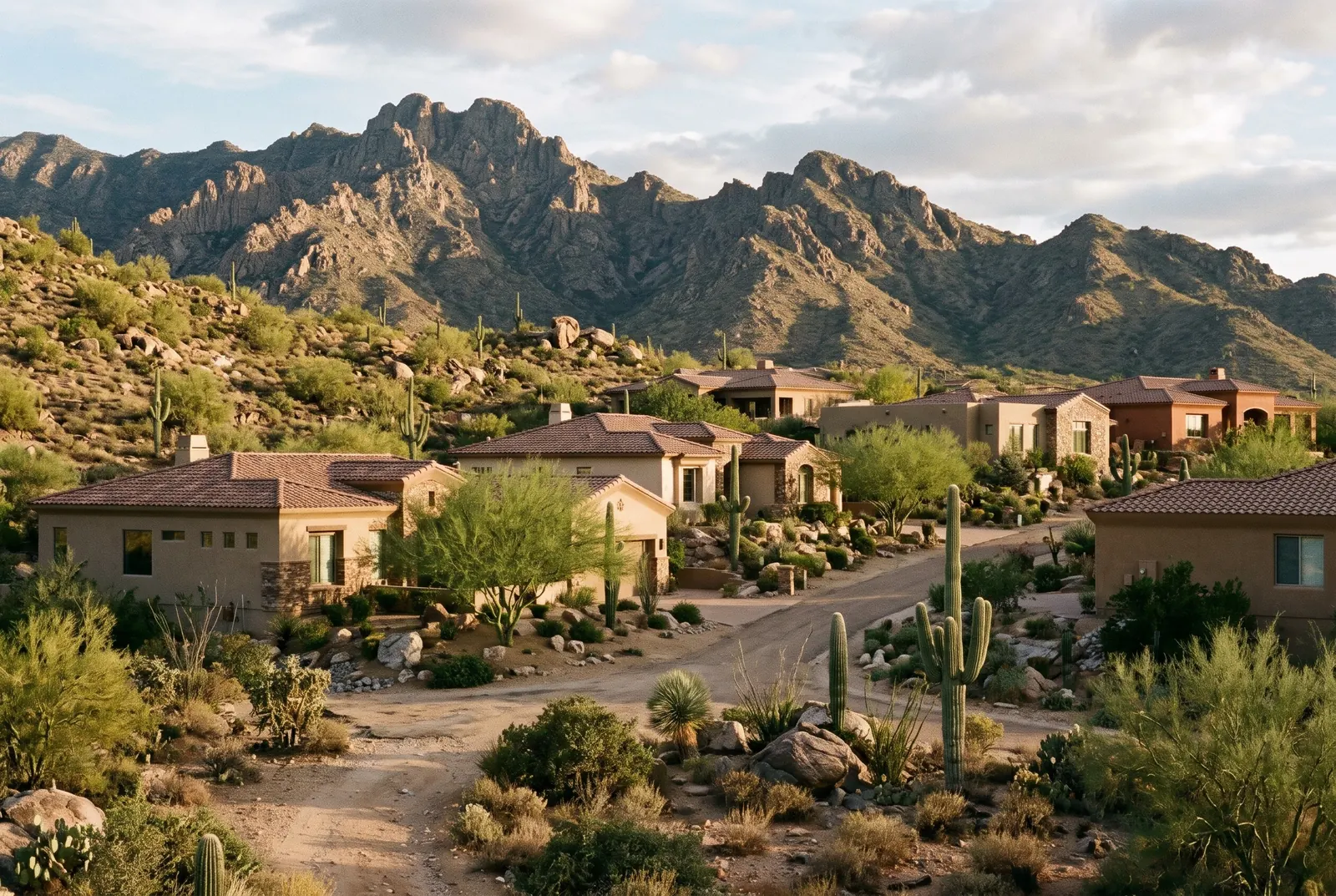
Single-story stucco home with a gravel yard backing onto open Sonoran desert
Desert-edge lots see more scorpions and crickets.

How the Phoenix seasons shape pest activity

Heat and the summer monsoon drive most pest timing here. The National Weather Service treats June 15 through September 30 as monsoon season.

  • Hot nights (late spring through summer): University of Arizona Extension notes bark scorpions are active when nighttime lows stay above about 77°F. Homes near washes and arroyos can see more of them during monsoon storms.
  • Monsoon (July–September): Desert subterranean termites make their swarming flights after rain in this window. Turkestan cockroaches peak around June.
  • Cooler months (November–May): Roof rats are most active, which overlaps with winter citrus season.
  • Fall: American cockroaches and field crickets move indoors as temperatures drop, and wolf spiders wander in looking for prey.
  • Year-round: German cockroaches indoors, black widows, and desert recluse spiders.
When Phoenix pests are most active Shaded grid of six common Phoenix-area pests across five parts of the year. Termite swarms after monsoon rain, July to September, are highlighted; scorpions peak in summer, roof rats in the cooler months, and German cockroaches stay active indoors year-round. Dec–Feb Mar–Apr May–Jun Jul–Sep Oct–Nov Bark scorpions Active Peak Some Termite swarms Active Active Swarms Roof rats Active Active Some Some Turkestan cockroaches Peak Crickets, American roaches Active German cockroaches Active Active Active Active Active Activity Lower Some Active Peak Highlighted
When Phoenix pests are most active. Shading summarizes University of Arizona Extension timing and the National Weather Service monsoon dates; it shows when each pest is most noticed, not counts. Highlighted: desert subterranean termite swarms after monsoon rain, July to September. Arid-land termites swarm January to March.

What to ask before you hire a pest-control company

Most frustration with pest control comes from mismatched expectations, not bad chemistry. A clear conversation up front about what's included, how often, and what happens if pests come back saves a lot of trouble.

For a detailed walkthrough of reading quotes and contracts, see pest control cost.
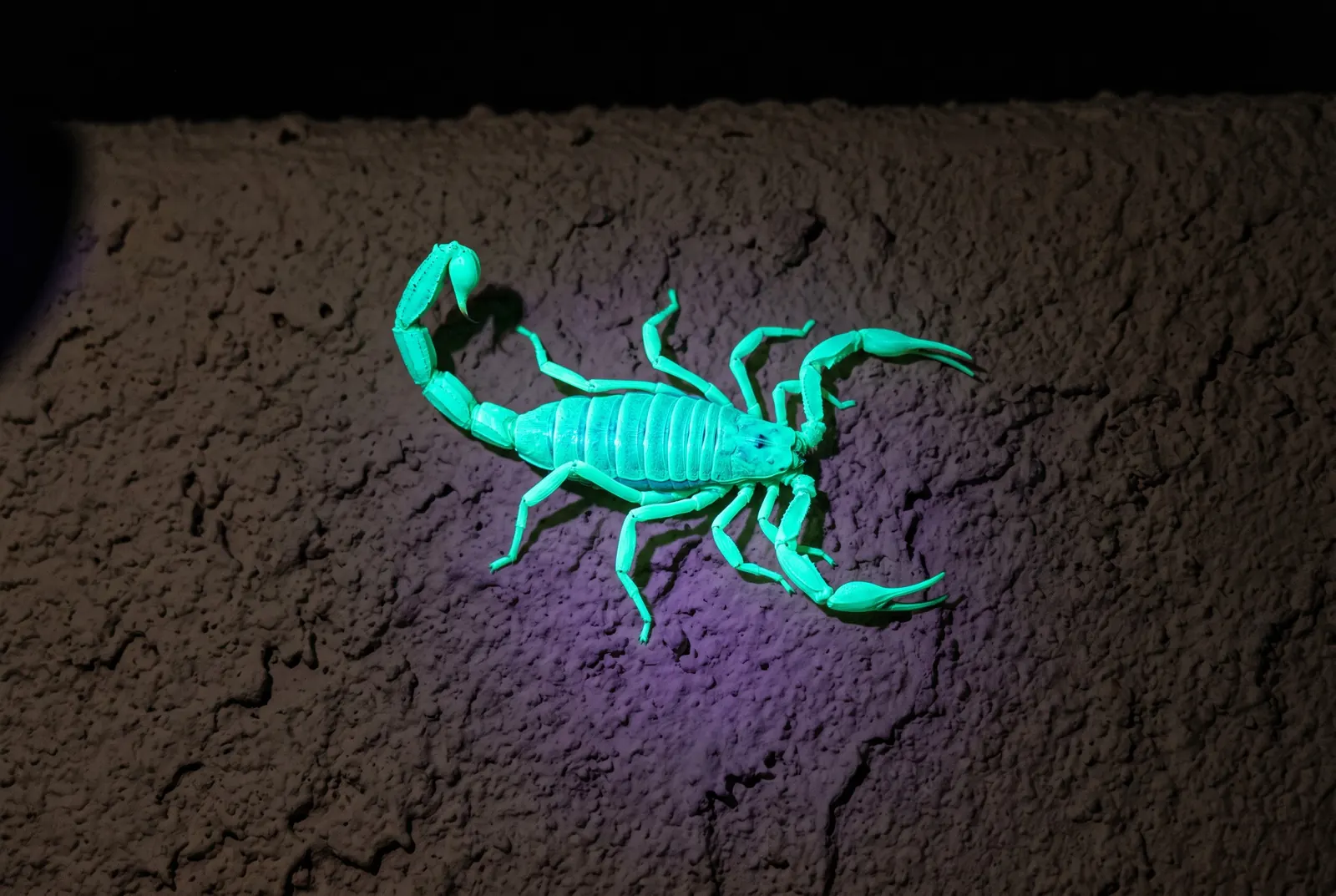
Bark scorpion glowing cyan-green on a stucco wall under an ultraviolet flashlight
A bark scorpion under UV light at night.

How Arizona pest-control licensing works

Structural pest control in Arizona is regulated by the Pest Management Division of the Arizona Department of Agriculture. A 2016 law moved the former Office of Pest Management into the department as this division, effective June 30, 2016. Agricultural pest control is a separate program.

Doing non-exempt pest control in Arizona takes three things: a business license, a qualifying party registered to that business who is responsible for training and supervising its applicators, and certified applicators to do the work. Licenses renew every year, and the business must keep proof of financial security on file with the division. You can look up companies and individual technicians online. The steps are on the license check guide.

Pest control by city

Pest pressure differs across the Valley, so each city page covers its own terrain, housing and local patterns:

  • Scottsdale: desert-edge homes in the north, older irrigated neighborhoods in the south.
  • Mesa: historic citrus areas, rural Lehi, and hillside desert in the northeast.
  • Chandler: mostly post-1980 subdivisions, lake communities, and former farmland.
  • Glendale: century-old bungalows downtown and desert parkland in the north.
  • Gilbert: a former farm town turned fast-growing suburb with recharge basins and lake communities.
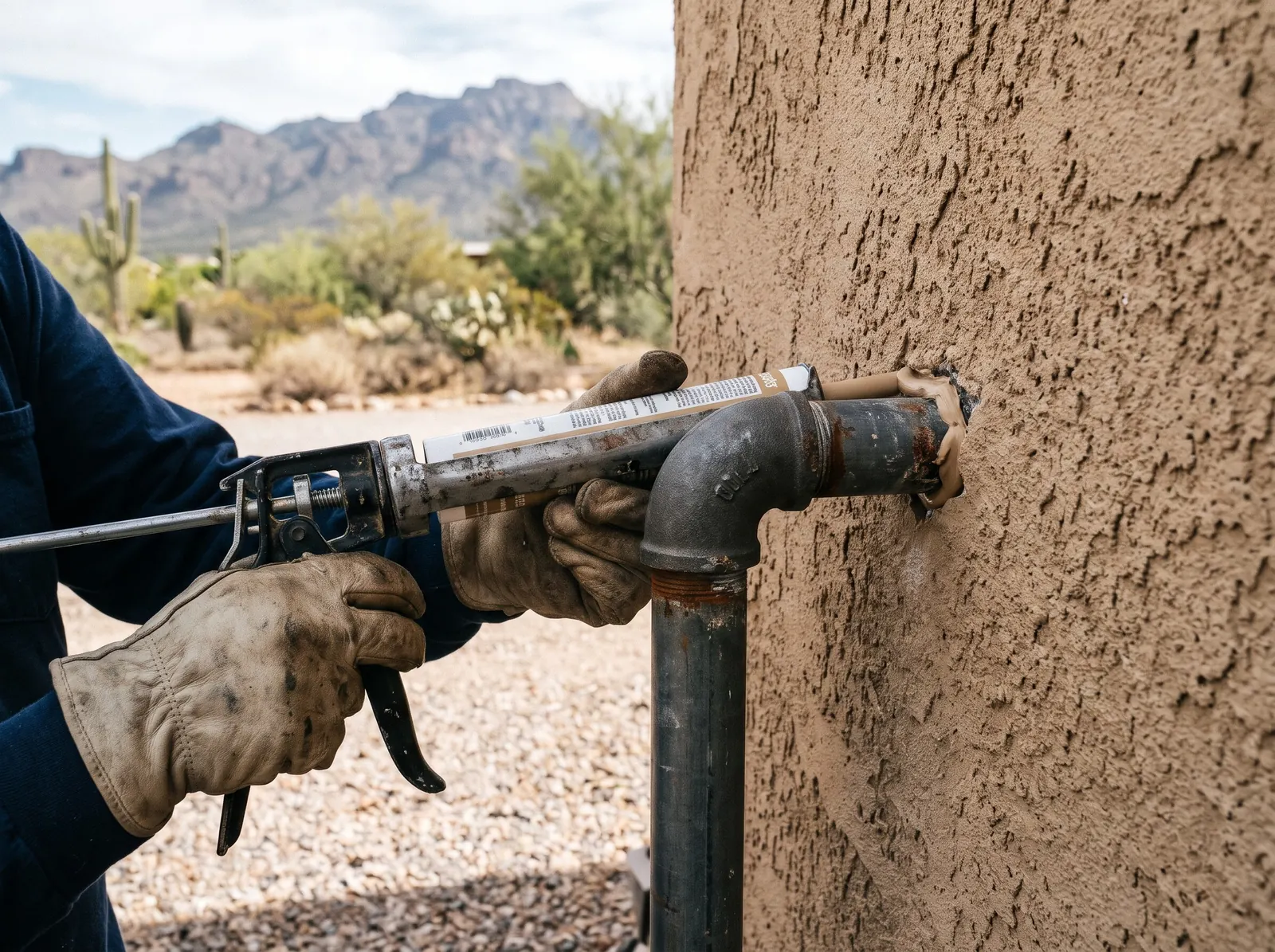
Gloved hands sealing the gap around a pipe entering a stucco wall
Sealing gaps keeps out scorpions, roaches and rats.

About this site

Phoenix Pest Referral is an independent resource, not a pest-control company. It does not inspect, treat or recommend products. If a licensed provider is listed here in the future, that will be stated clearly, along with how the listing works. See about this site.
Common questions

What are the most common pests in Phoenix homes?

Arizona bark scorpions, desert subterranean termites, roof rats, ants, several cockroach species (American, German, Turkestan and oriental), and crickets are the usual calls. Black widow spiders and desert recluse spiders are also active year-round. Which ones matter most depends on whether your home backs onto open desert, has mature citrus and palms, or is newer construction.

Who licenses pest-control companies in Arizona?

The Pest Management Division of the Arizona Department of Agriculture. Since mid-2016 it has regulated structural pest control, which covers pests in and around homes and other buildings. A company needs a business license and a registered qualifying party, and the technicians who apply pesticides must hold their own certification.

When is pest season in Phoenix?

It varies by pest. Bark scorpions are most active on warm nights, roughly when overnight lows stay above about 77°F. Desert subterranean termites swarm after monsoon rains from July to September. Roof rats are most active from November through May. Indoor cockroaches and some spiders are a year-round issue.

Does this site do pest control?

No. Phoenix Pest Referral is an independent educational site. It does not inspect, diagnose, treat or recommend pesticides, and it is not licensed to perform pest control. It explains common pests, seasons and the questions to ask, so you can hire a licensed Arizona company with fewer surprises.

Sources

Before you call anyone

Have these ready. You'll get a clearer quote and can compare companies on equal terms.

  • What you saw, where, and when, with photos if you have them
  • Home age, construction, and whether it backs onto open desert
  • Kids, pets, or health concerns the company should know about
  • One-time treatment or a recurring plan
  • The company's Arizona license, checked before treatment
  • Written scope, warranty, and cancellation terms