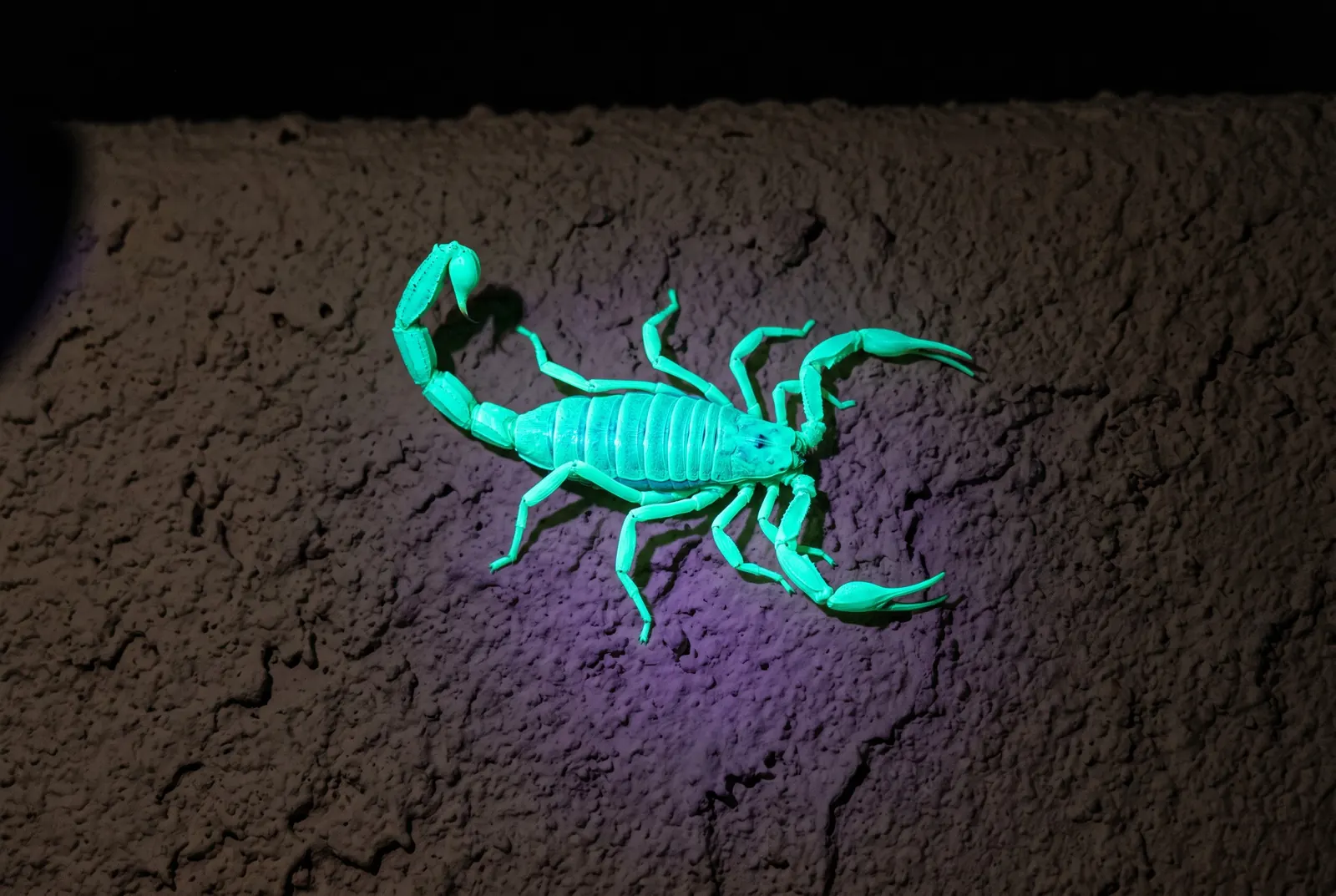
What is the Arizona bark scorpion?
The Arizona bark scorpion (Centruroides sculpturatus) is the scorpion most Phoenix-area homeowners run into. Adults are about 2 to 3 inches long with slender pincers and a long, thin tail. Their color and markings vary a lot, so color is not a reliable way to identify them.
It is the only scorpion in the United States considered a medical concern, according to University of Arizona Extension. Other Arizona scorpions can sting too, and sensitive people can react badly to any of them, but the bark scorpion is the one that drives most pest-control calls here.
Bark scorpions climb, they don't dig
Unlike many desert scorpions, the bark scorpion never burrows. It lives in aboveground protected spots: woodpiles, sheds, rock and debris piles, and trees. That climbing habit is why people find them on walls, ceilings and in bathtubs, and why tree branches touching the roofline can give them a path onto the house.
They glow under UV light
Scorpions fluoresce under ultraviolet (black) light and can be seen from several yards away at night. Extension guidance suggests UV checks during summer evenings, roughly 8 to 11 p.m. A UV walk around the yard and house exterior is a cheap way to see where scorpions are concentrated before and after any treatment. Don't look directly into the UV light.
When are scorpions most active in Phoenix?
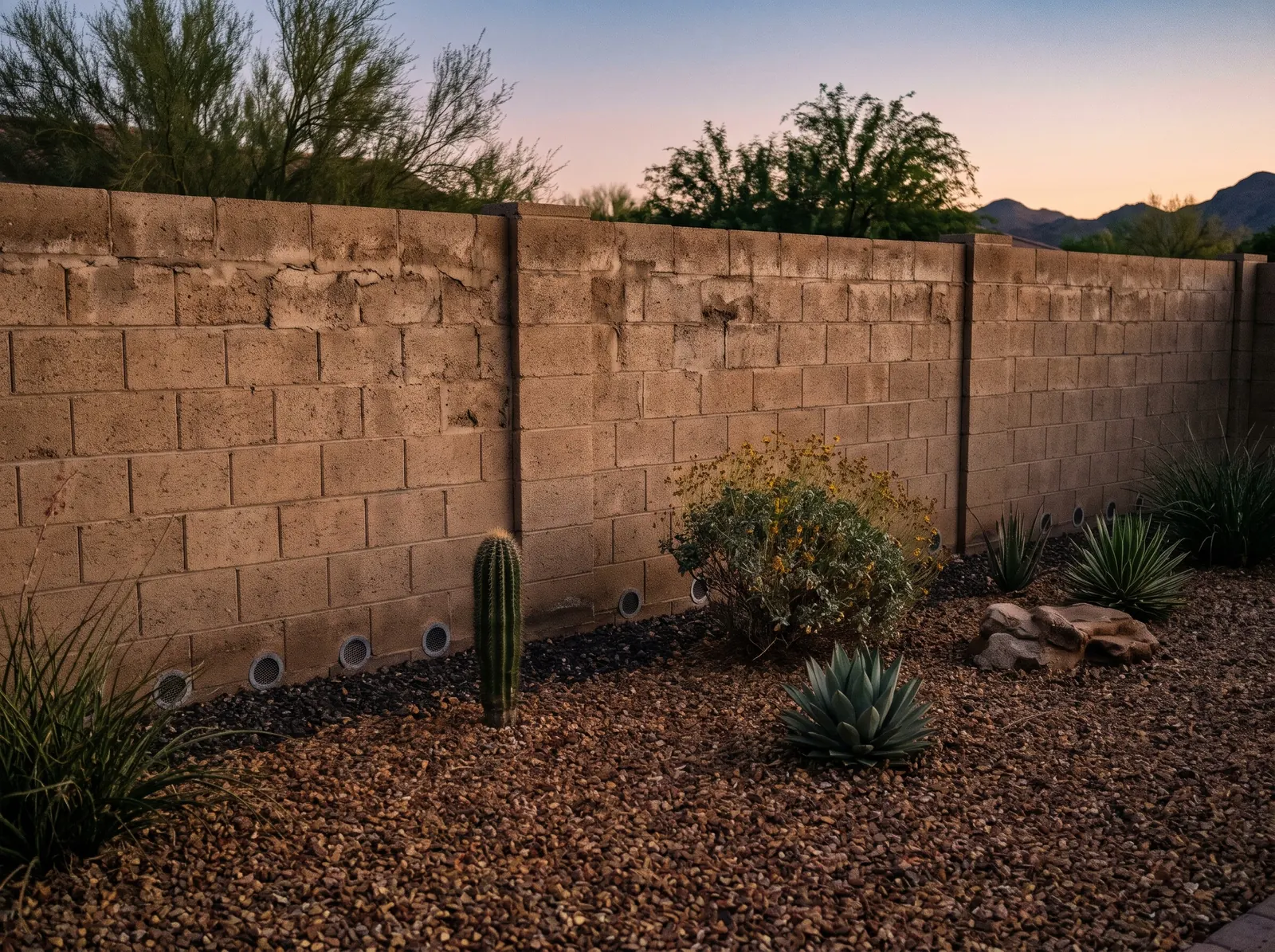
Extension says scorpions are active when nighttime lows stay above about 77°F, which in the Phoenix area means late spring through early fall. Homes near rivers, washes and arroyos can see more scorpions during summer monsoon storms.
Food matters too. Bark scorpions become indoor pests mostly where crickets or cockroaches give them something to eat. Cutting down on those insects with lighting changes, sealing and the general pest control steps helps make a house less attractive.
Why scorpions are hard to control
University of Arizona Extension is blunt about it: scorpions cannot be managed with pesticides alone, and getting rid of them completely around a home is extremely difficult. Several things work against spraying:
- They shelter in protected spots like woodpiles, debris and gaps in the house where sprays don't reach well.
- Removing their insect food helps, but Extension notes it won't eliminate scorpions around a home.
- Homes next to open desert or washes are surrounded by natural scorpion habitat.
So the most effective step, according to Extension, is pest-proofing the house itself to reduce contact and stings. If you're finding scorpions indoors regularly, Extension recommends bringing in an experienced pest management professional.
What scorpion-control providers typically do
Services vary, and the names companies use ("scorpion package," "sealing," "barrier") aren't standardized. Most offers combine some of the following.
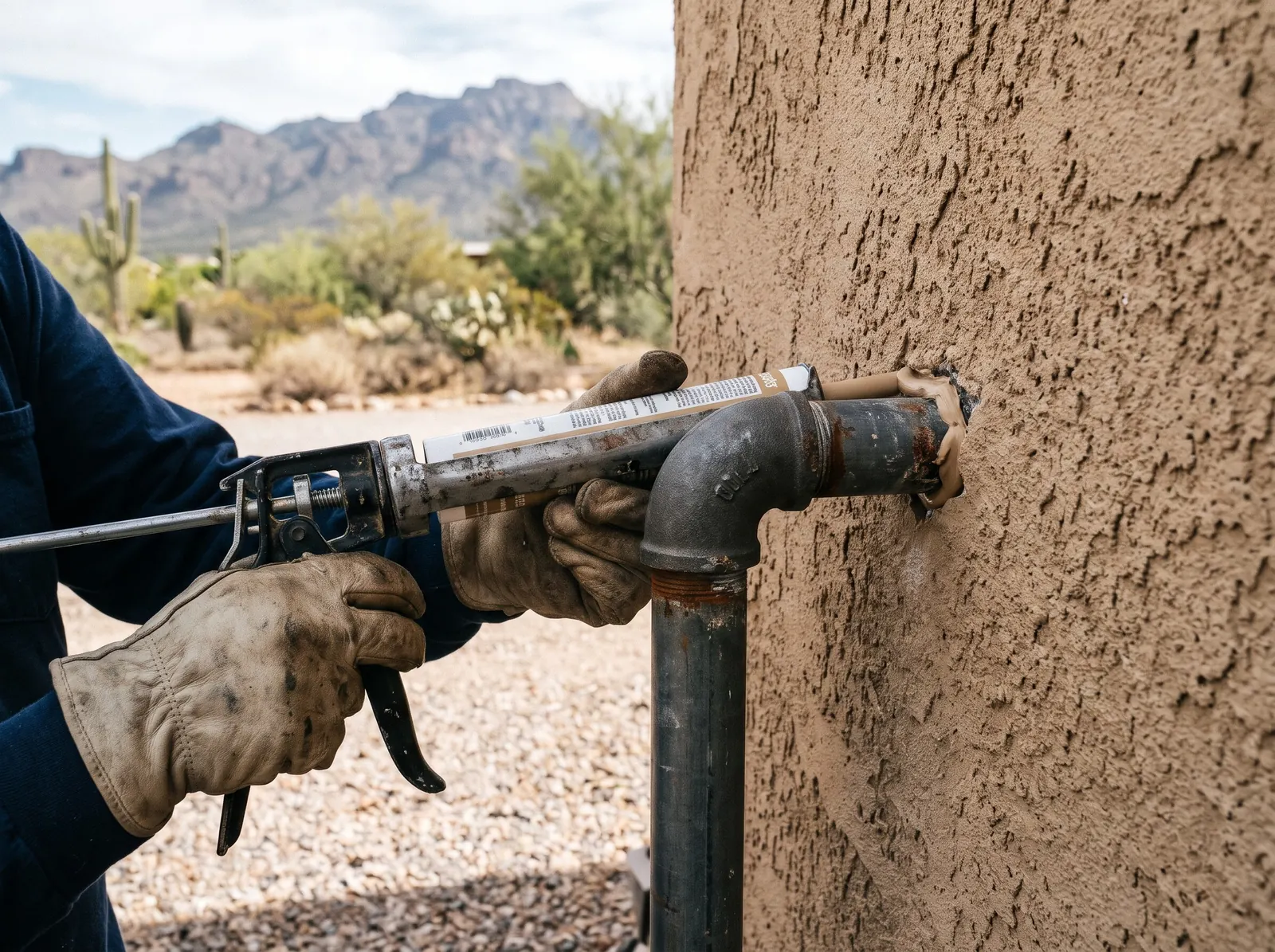
Exclusion and sealing
This is the physical work of closing entry points. Extension guidance lists:
- Caulking gaps around roof eaves, pipes and other wall penetrations.
- Fitting weatherstripping snugly around doors and windows, and making sure door sweeps have no gaps.
- Keeping window screens intact and tight in their frames.
- Screening brick-veneer weep holes with coarse steel mesh, without plugging them, since they ventilate wall spaces.
Some companies do this sealing themselves, some subcontract it, and some just recommend it. Ask which, and ask for a written list of what will be sealed.
Habitat changes
Providers may recommend clearing rocks, debris and clutter from against the house, trimming bushes and branches away from walls and the roof, raising garbage cans off the ground, and bringing firewood straight to the fire rather than storing it inside. These are often things you do yourself.
Treatments and monitoring
Many plans include insecticide applications around the foundation, entry points and hiding spots, sometimes combined with sticky traps indoors to monitor activity. Extension's view is that these are a supplement to sealing and habitat changes, not a replacement. Ask what product will be used and where. Arizona rules require the applicator to leave you a written notice after each application.
How to judge a scorpion-control quote
A good quote names the work. "Scorpion treatment, monthly" tells you little. A clearer one says which areas get treated, what gets sealed, how often the technician comes back, and what happens if scorpions keep turning up. Be cautious of guarantees of a "scorpion-free" home. Extension's guidance says that isn't realistic for most properties, especially at the desert edge.
Check the business's Arizona license before signing. The steps are in the license check guide. For typical national price ranges, see pest control cost.

A note on stings
This site doesn't give medical advice. If someone is stung by a scorpion, call Poison Control at 1-800-222-1222. It is free and staffed 24 hours a day, and in the Phoenix area it connects to the Banner Poison and Drug Information Center. The center notes that children are at greater risk of severe effects. Call 911 for any emergency.
Common questions
Can pest control get rid of scorpions completely?
Usually not. University of Arizona Extension says scorpions cannot be managed with pesticides alone and that eradication around a home is extremely difficult. The realistic goal is fewer scorpions indoors, mostly by sealing entry points and reducing hiding spots and insect food. Be cautious of any provider that promises a scorpion-free home.
Why do scorpions glow under a black light?
Scorpions fluoresce under ultraviolet light, so a portable UV flashlight can spot them from several yards away at night. Extension guidance suggests checking during summer evenings, roughly 8 to 11 p.m. Avoid shining UV light toward your eyes. A night inspection with UV light is also a useful way to judge whether a treatment or sealing job is working.
Can bark scorpions climb walls?
Yes. The Arizona bark scorpion is a climbing species that never burrows, which is why it shows up on walls, ceilings and in bathtubs, and why tree branches touching the roof can give it a path onto the house. Trimming branches back and sealing gaps around eaves and pipes matters more for bark scorpions than for ground-dwelling species.
What should I do if someone is stung?
Call Poison Control at 1-800-222-1222. It is free and staffed 24 hours a day, and in the Phoenix area it connects to the Banner Poison and Drug Information Center. Children are at greater risk of severe effects. Call 911 for any emergency such as trouble breathing.
Sources
- University of Arizona Cooperative Extension, Scorpions
- University of Arizona, Arizona School and Home IPM Newsletter (June 2018), scorpions
- University of Arizona Cooperative Extension, Living with Scorpions (2019)
- University of Arizona Cooperative Extension, Crickets
- Banner Poison and Drug Information Center
- Banner Health press release on bark scorpion stings (June 2022)