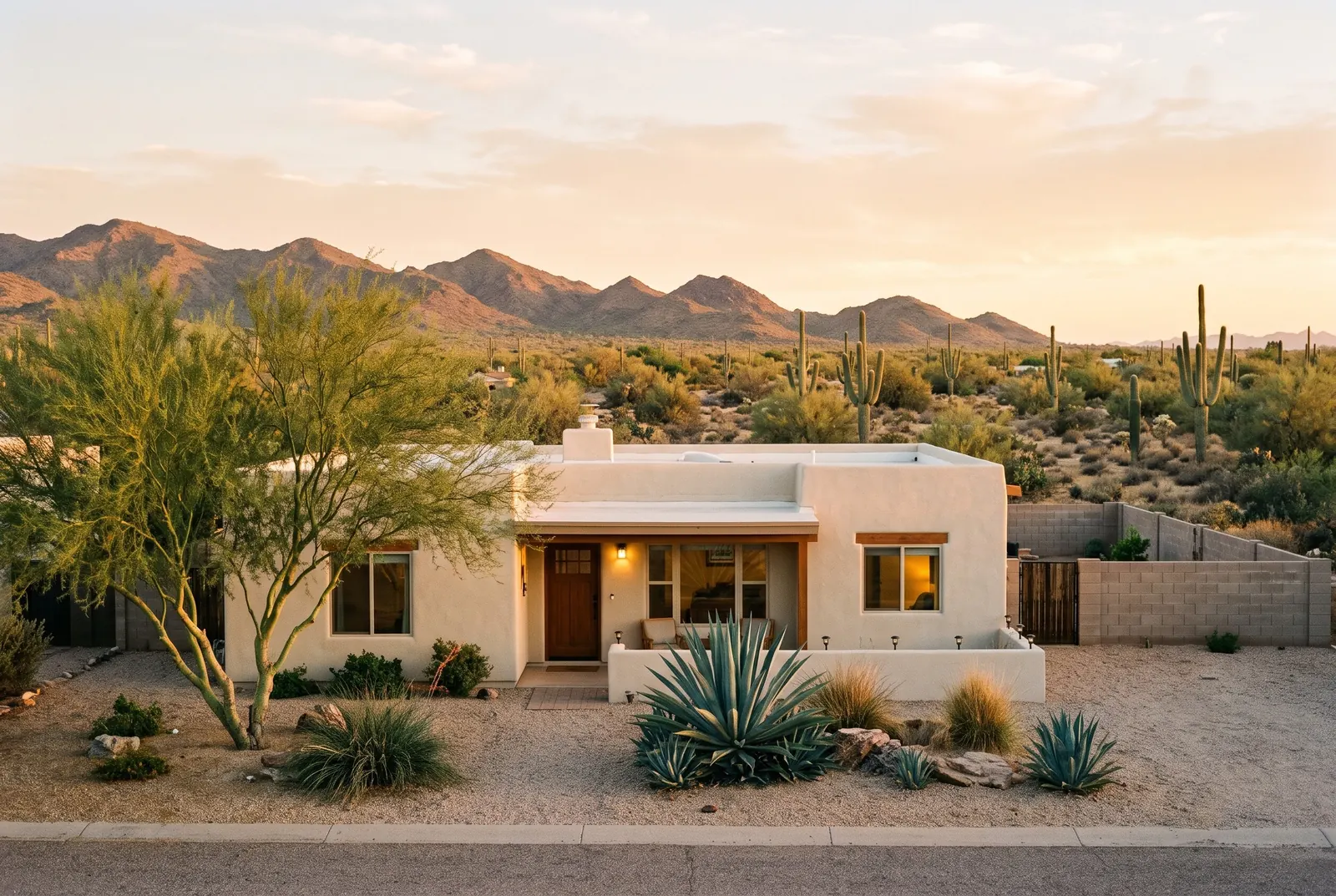
From hay fields to the largest town in America
Gilbert incorporated in 1920 as a farm town, built around its rail line and the water from Roosevelt Dam and the Eastern and Consolidated Canals. From 1911 into the late 1920s it was known as the "Hay Capital of the World." Then came very fast growth. Between 2000 and 2010, Gilbert was the fastest-growing U.S. town or city of 100,000 or more, and it counted about 268,000 residents in 2020. It is still governed as a town, often called the largest town in America.
The result is a housing stock that is mostly newer subdivision homes on former irrigated fields, along with a few distinctive communities:
- Val Vista Lakes, built from the mid-1980s around man-made lakes.
- Agritopia, a 166-acre community on a former family cotton farm, with construction starting in 2001 and an 11-acre urban farm at its center.
- The Heritage District, the town's original downtown core.
Termites on former farmland
Subterranean termites are the main structural concern here, as across the Valley. University of Arizona Extension names the desert subterranean termite as the most common and destructive desert species, swarming after monsoon rains from July to September. It also lists conditions that favor termites: moist soil near the foundation, wood touching soil, and stumps or wood debris around the house.
For Gilbert's relatively young homes, the key question is whether the original pretreatment is still doing anything. The Arizona Department of Agriculture says most Arizona homes are treated before or during construction, but that barriers can fail from soil disturbance, erosion and foundation cracks. Extension notes treatments can break down in Arizona's heat. Pools, patio extensions, new planting beds and irrigation work along the stem wall are common ways a subdivision lot's treated zone gets disturbed. See termite treatment.
Water features: lakes and recharge basins
Gilbert has more open water than its desert setting suggests. The Riparian Preserve at Water Ranch, east of Greenfield Road along Guadalupe Road, covers 110 acres. Seventy of those acres are seven groundwater recharge basins, filled in rotation with treated effluent, plus a lake stocked for fishing. Lake communities like Val Vista Lakes add more.
Water and dense vegetation support insects generally, and the crickets and cockroaches drawn to them are also food for bark scorpions. University of Arizona Extension suggests turning off outdoor lights at night where possible or using bug bulbs, sealing gaps, and keeping doors closed at night. Mosquitoes are handled by Maricopa County's vector control program, but standing water in your own yard is yours to deal with. See general pest control.

Roof rats in maturing neighborhoods
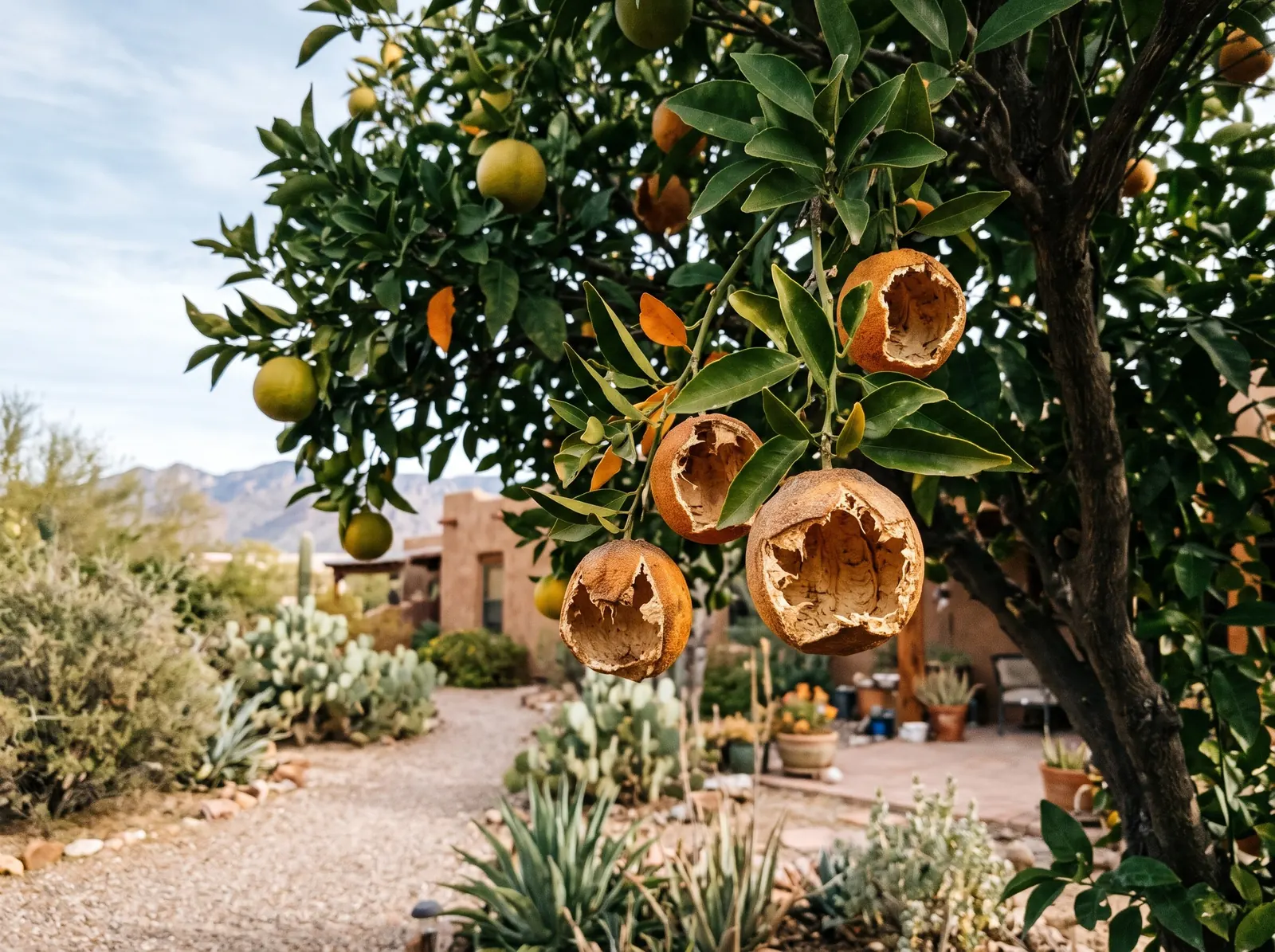
University of Arizona Extension says roof rats have settled into citrus, palms and mature landscaping near canals across the Valley. Many of Gilbert's 1980s and 1990s neighborhoods now have exactly that kind of grown-in landscaping. In January 2025, ABC15 reported a pest-control company describing a sharp increase in East Valley roof rat calls. Look for hollowed citrus, attic noises at night, and gnaw marks near the eaves. See roof rat control.
Hiring in Gilbert
Check the company's license with the Arizona Department of Agriculture's Pest Management Division before signing. The license check guide walks through the business, technician and complaint searches.
Common questions
My Gilbert home is only 15 or 20 years old. Do I still need termite inspections?
It's worth it. The Arizona Department of Agriculture says most homes get a termite pretreatment during construction, but treated barriers can fail from soil disturbance, erosion and foundation cracks, and University of Arizona Extension notes treatments can break down in Arizona's heat. The state's termite history search shows treatment records filed for an address over the past three years.
Does the Riparian Preserve bring more mosquitoes or pests?
Any area with standing water and dense vegetation supports insects, and the Riparian Preserve at Water Ranch includes seven groundwater recharge basins plus a fishing lake. Mosquito concerns in Maricopa County are handled by the county's vector control program. For your own yard, remove standing water and keep irrigation from pooling near the foundation.
Are roof rats found in Gilbert?
Yes. Roof rats are established across the Phoenix metro. University of Arizona Extension says they favor citrus, palms and mature landscaping near canals and food sources, and in early 2025 ABC15 reported a pest-control company seeing a sharp increase in East Valley roof rat calls. As Gilbert's landscaping matures, it provides more of that habitat.
Sources
- Wikipedia, Gilbert, Arizona
- Town of Gilbert, Riparian Preserve at Water Ranch, About
- LocalWiki Gilbert, Agritopia
- ActiveRain, Real estate history in Val Vista Lakes
- Arizona Department of Agriculture PMD, Termite Recurrence Guide
- Arizona Department of Agriculture PMD, Termite Action Report Forms (TARFs)
- University of Arizona Cooperative Extension, Termites of the Desert Southwest (AZ1356)
- University of Arizona Cooperative Extension, Roof rats: identification, ecology, and signs
- ABC15, East Valley seeing increase in roof rats (Jan. 2025)
- University of Arizona Cooperative Extension, Crickets